The Young Men’s Christian Association (YMCA) has brought HIV services closer to young people in Western Equatoria, South Sudan.
Christopher*, a young man living with HIV, said the YMCA has provided a testing laboratory for HIV and other facilities like internet services and a cinema specifically for young people.
Christopher, 28, was afraid of going to the main hospital to get tested because of the number of people there. He said: “I didn’t want anyone to see me go for HIV test, especially friends, because mostly when people see anyone going to access voluntary counselling and testing services they automatically assume that you’re HIV positive.”
But when the YMCA started offering this service he decided to get tested because they have a youth-friendly centre. Christopher said: “I’m now encouraging other young people to stop bad sexual practices and to visit the YMCA services.”
Supporting young people
Speaking in the state capital Yambio, YMCA director Justin Augustino Kirima said the youth centre – with support from the Swedish International Development Agency Cooperation (SIDA), the International HIV/AIDS Alliance and the Ministry of Youth and Sports – is playing a great role for young people by providing HIV testing, counselling, reproductive health and family planning services.
“If you go to other places,” Kirima said, “you will find that most young people from the age of 20 and below are not willing to go for voluntary testing and counselling (VCT) but, with what we are offering, some young people are now able to access services and know their HIV status.”
He called upon young people who have not been tested to do so in order to reduce the HIV rate in the state and in South Sudan in general.
Peer pressure and stigma
Many young people feel pressured by peer influence and are not always well educated about safer sex methods like the use of condoms.
The county commissioner for Yambio County, the Honourable John Elia Kuzee, believes HIV is on the increase among young people because they are copying a lifestyle and culture from other places, as many youth grew up in refugee camps in countries such as the Democratic Republic of Congo, Central African Republic, Kenya, Uganda, USA, Canada, UK and Australia.
Kuzee has challenged those who discriminate against people living with HIV to stop immediately because people living with HIV have the right to access all services that are offered to citizens. He said: “The fight against HIV is the collective responsibility of both government and citizens and I urge all to stand firm in fighting HIV and AIDS.”
On 1 December 2013, the state’s HIV/AIDS Commission announced there has been a decrease in the HIV rate in Western Equatoria from 7.6% to 6%. The state government has been using the media and public rallies to educate the public on how to live with the virus once diagnosed positive. Currently in Western Equatoria state there are many community-based organisations that are dealing with the issue of HIV.
* not his real name
Read more about HIV prevention and treatment
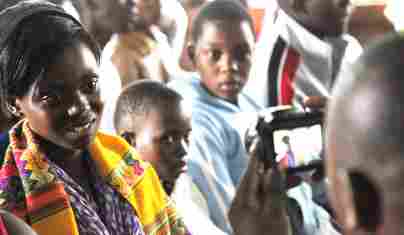
Image: Secondary school students line up for voluntary counselling and testing services at the YMCA
© Mulaison Galli

i do love to promote social related issues, health, political and cultural issues. am among the kcs who picked was trained in juba south Sudan but i only became not committed because you need to do a lot in journalism research, so i encourage the upcoming journalist in south Sudan to be posting on the page without fear.