I was born in Rwanda and I was born with HIV. We use the words stigma and discrimination a lot when talking about HIV, but I wonder if people really understand what these words mean.
When I was finishing high school, I was among the best five students in science in the whole country and the only girl. I was awarded an international scholarship to study medicine in Morocco but when it was time to go to school they tested for HIV and told me: “The government can’t waste money for a person who is dying of AIDS.”
So I went to a state college, because I was found ‘guilty of having HIV’. And that’s how I became a young HIV activist fighting for people whose rights and dignity are affected by the virus.
Losing our parents
When I lost my parents at the age of 17, I started taking care of my two sisters who were younger than me, the youngest of whom was then five.
In African cultures it’s expected that orphans and widows will be taken care of when left alone but this does not necessarily apply for AIDS orphans and widows. People used to point fingers at us and whisper that we had a curse from our parents.
My youngest sister loved to play with other kids in the neighborhood. One day she was playing with Chris, a ten-month-old baby boy, and she was kissing Chris who was laughing. Suddenly Chris’s mum, who was watching them through the window, came running and took Chris out of my sister’s arms, saying: “Don’t ever come back here, I don’t want you to infect my baby with AIDS. Don’t try to kill my baby. We all know that you are dying of AIDS.”
My sister, who was still dealing with the loss of her mother, came running to me crying, terrified and devastated. I took her in my arms and she was shaking. She looked into my eyes and asked me: “Are you dying soon?” I replied: “No, I have no business to do with death.”
School bullying
After this incident, my sister didn’t leave the house. She was watching over me, living with the fear of losing another family member as well as dealing with the shame of HIV stigma. The news spread and reached her school. The other children threw stones at her and teased her by calling her “AIDS child.” She wanted to drop out of school and I helped her to change schools so that she could feel comfortable but that still didn’t help.
Growing up, she became a very beautiful young girl but the boys would come up to her and tell her that she was a demon and described her as: “beautiful walking dead to tempt men”. All this has shaped her personality. She makes few friends and doesn’t trust people easily.
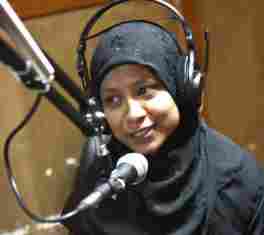
Fortunately, my youngest sister made it. At the age of 16, she was heading up a radio programme on teenagers, HIV/AIDS and sexual and reproductive health, rights and needs in Rwanda. And she is now a brilliant young lady finishing high school in America. She has a dream of becoming an officer in the US Air Force or to become a TV journalist and report on HIV. I am so proud of her.
Combating stigma
This July at the International AIDS Conference, Elton John said: “The AIDS disease is caused by the HIV virus but the AIDS epidemic is caused by stigma, hate, misinformation, ignorance and indifference.”
These powerful words say it all.
I hope sharing my experience will help others feel the impact that stigma and discrimination can have, and more importantly the need to fight it. We will not reach an HIV-free generation unless we do. Let us continue to fight!
Read more stories about HIV and human rights