What type of world do I want to live in by the year 2030? This question was posed this week during two inspiring days at the Social Good Summit, in New York, where I heard activists and global leaders discuss the impact of new media on social good initiatives around the world.
As a woman and an infectious diseases physician, I can tell you quickly the issues close to my heart; gender equality, and sexual and reproductive health, including HIV. But coming from a generation that didn’t grow up with social media, I was curious to find out how we can “unite to unlock the potential of technology to make the world a better place” by the time I may have grandchildren.
Sexual and reproductive health
Women’s empowerment was a theme throughout the summit, like a candle in the dark. When we talk about girls we need to think about our daughters, our sisters and remember the millions around the world who suffer unwanted pregnancies and exposure to HIV, and other sexually transmitted diseases, because of lack of access to family planning and ability to negotiate safe sex.
But as Melinda Gates pointed out during the summit: “Contraceptive access is just the tip of the iceberg for women’s sexual and reproductive health needs and rights.”
In one year the Millennium Development Goals (MDGs) expire. Governments and the United Nations now face the challenge of developing a new framework that could make history by bringing about an end to poverty, an end to inequality and an end to diseases such as AIDS. We need a more equitable and sustainable world, but it won’t be achieved unless we, as members of civil society, don’t step up our game and ensure our voices are heard.
For me, this means getting gender inequality on the table, as it has a massive impact on public health. As a result of lower economic and socio-cultural status, many women and girls are disadvantaged when it comes to negotiating safe sex. Young women (15-24) have HIV infection rates twice as high as young men, accounting for a quarter of all new HIV infections.
Tackling child marriage
It’s vital that we join together and use our voices – both men and women – to ensure a standalone goal for gender equality and gender transformative approaches in the post 2015 development framework. I was encouraged to hear about a new global UN solidarity campaign He for She which urges men to advocate for gender equality, as they will definitely need to be part of the solution.
The question is: are we prepared to do whatever it takes to move forward and go for societal and institutional transformation, to bring about equality for women and girls? According to Graca Machel, Mozambican politician, humanitarian and widow of Nelson Mandela, this is the only way to ensure no one is left behind.
Machel hammered home the point by talking about child marriage and the devastating consequences it brings across all aspects of a girl’s life. “Every year 15 million girls are forced into marriage. Child marriage is the entry point to so many MDGs; education, health, poverty,” she said.
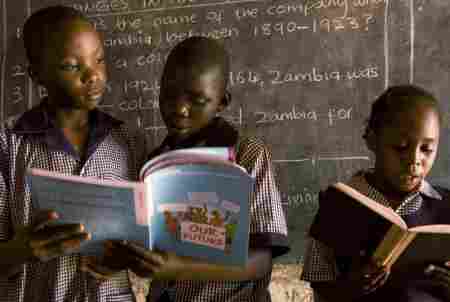
If girls can be retained in school, not only until they finish primary education, but also secondary school, they will not only gain skills for employment, but also the tools and resources they need to make decisions on marriage and family planning.
Linking services, data and technology
The expansion of co-managed HIV and tuberculosis services has shown to reduce morbidity and mortality all over the world. And there is increasing understanding that linking different health services more closely can bring massive benefits. If a woman looking for vaccines for her baby can also be screened for sexually transmitted diseases, receive contraception and nutrition skills, and talk about gender violence, all at the same place, close to home, it is more likely to happen.
So how can new media and technology help?
Gates explains: “Cell phones are ubiquitous in the developing world and we can use them to collect data to ensure progress.”
Disaggregating data on access to healthcare is essential to ensure the most marginalized, including women and girls, are not left behind. There are programmes which now give mobile phones to young women to go out in the field and interview other women on a regular basis to find out if their needs are being met. This data is regularly fed back and used to make improvements to services.
There is also an increasing number of mHealth platforms – which give people access to public health information via mobiles, and information is power. For HIV, stigma remains a major barrier to people accessing services. Mobile health services can help people access life-saving information in a safe way and non-stigmatizing way.
These are just a couple of ways technology is helping us move forward, and I barely have time to mention what I’ve learned about the power of social media to share stories, break down barriers and connect people!
My vision of 2030
The Social Good Summit showed me there are hundreds of thousands of people out there, both on social media and in the real world, making change happen.
Young people are leading the way through technology, and making connections around the world to see how they can help improve each other’s lives.
By 2030 my daughter will be in her thirties and maybe she will have her own daughter. Whatever happens, I want her to live in a world where every woman and girl knows her sexual and reproductive health rights and is free to make decisions over her own body.

Excellent article, congratulations,the point of view from a Dr is very interesting.