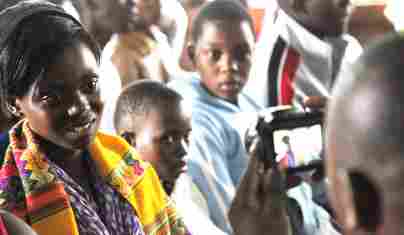
When I was invited to become an HIV peer counsellor for a youth organisation, I was nervous because I had developed a skin condition, and I’d lost confidence in my appearance.
From 2005 to 2006 I had a molluscum infection in reaction to a lot of things which could have been: the sulphur from the cotrimoxazole drug that I took, poor diet since at that time my mother and I were living in poor conditions, or poor adherence to antiretroviral treatment. Whatever the cause was it left my face looking like I had survived some burns. This happened during my third and fourth year of secondary school and made me feel inferior to other youths my age.
But things changed in 2009, when I accepted Africaid Zvandiri‘s invitation to become a peer counsellor. Africaid Zvandiri is a Zimbabwean organisation which provides care and support to children living with HIV so as to keep them safe and confident. Being a peer counsellor meant helping adolescents of my age cope with their HIV status.
Growing in confidence
I became nervous, yet I would not decline the call. I was not a confident person who could stand in front of people. I kept on wondering how I was going to knock on people’s houses and talk to them.
My skin still had some side effects of cotrimoxazole, even in 2009. However I found myself visiting my peers’ homes to help them adhere to their medication regime and providing counselling on positive living. At first I pretended to be confident. All I had to do was to show up with a brave face and keep up appearances.
The role included providing moral support and linking young people to services such as education assistance. I also became a facilitator for the Adolescents’ Corner at Wilkins OI Clinic in Harare. This is a section in the clinic where children and adolescents receiving treatment drop in for educational and fun sessions on HIV.
Later on, the dependence and attachment of children to whom I provided counselling laid a heavy burden of responsibility on me. Before long, I knew it was high time to get out of my comfort zone and become a role model. I accepted the reality that I had to build on my character and become an example to my peers. Gradually, showing confidence was no longer a pretence but became a natural act.
Changing other people’s lives
Being a peer counsellor changed my attitude. I thank Africaid Zvandiri for giving me the opportunity for this kind of exposure. I knew I had to be strong in order to help others be strong. Most of the adolescents living with HIV had low self-esteem and had no goals in life. We would sit down while I shared information about my past and where I was going.
Because I shared my story, the other young people also began to understand their stories. They began to remember their dreams and soldiered on, trying to live positively. Most guardians were motivated and, after every home visit, their hopes for their children were revived.
Now I feel good about myself because most of the adolescents I supported have developed. Some are married and some have continued their education in high school and university. Others have become small entrepreneurs and professionals. Seeing them all grown up makes me realise I have come a long way. Their stories and my story are an indication that HIV is only in the blood and not in the brain.
Read: Charlie Sheen tackles HIV stimga but perpetuates stigma against sex workers
thank you all for such a motivating experiences..
I am so much happy with the phrase..”Hiv is only in the blood,but not in the brain”..yeah..i really conqure with that..however,i think that is why people should learn their sero status as early as possible for the earlier health management services to commence..delay to which might result to the brain cells getting infected by the virus,..
God bless you all..
Am in kenya
htc counsellor