
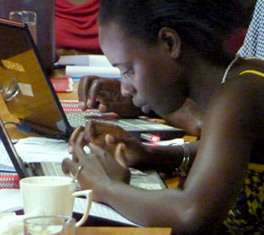
Ignatius Gutsa, Zimbabwe: May 2011
Zimbabwe currently faces a huge HIV and AIDS crisis. Over the course of the past decade, the country has experienced a severe economic downturn, resulting in acute shortage of drugs and equipment to fight HIV. To aid Zimbabwe’s response, the country received a major boost at the beginning of 2010, with a five-year US$84 million grant from the Global Fund to Fight AIDS, Tuberculosis and Malaria (The Global Fund). This grant has gone a long way towards increasing access to HIV services and treatment.
The grant came from Round Eight, and is the third since 2000. What is commendable about this funding is that it comes against the backdrop of yet another marked decline in adult HIV prevalence (ages 15-49). From a high of over 30 percent in the late eighties, prevalence fell to 15. 7 percent in 2007, and currently stands at 13.7 percent, according to 2009 estimates [1].
Interventions now need to focus on people already living with HIV. Funding from Round Eight has certainly come at the right time for the Zimbabwe National Network of People Living with HIV and AIDS (ZNPP+). ZNPP+ was founded in 1992 as a national umbrella body, representing and coordinating the interests and activities of support groups and organisations of people living with HIV (PLHIV) throughout Zimbabwe. ZNPP+ received funding as a ‘sub-sub recipient’ of the ‘sub-recipient’ Zimbabwe Aids Network [2]. The ZNPP+ also received under Round Five, as a sub-sub-recipient of the Southern Africa AIDS Dissemination Services (SAfAIDS).
Judith Feremba, the Gender and Youth Officer at ZNPP+, acknowledges that funding received under Round Five helped their organization tremendously. Ms Feremba said: “Funding from Round Five of the Global Fund enabled PLHIV to have a voice in the constitution-making process, as this was an opportunity to air their views and have their issues mainstreamed into the new constitution. Based on our active participation in the current constitution-making process, we are anticipating that the rights of PLHIV will be enshrined in the new constitution. This will be a milestone achievement as the current Zimbabwean constitution lacked explicit reference to the right to healthcare for PLHIV.”
Funds received under Round Eight have also enabled ZNPP+ to reach out to its constituency. ZNPP+ is currently scaling up its outreach activities, and its visibility in all of Zimbabwe’s ten provinces. Ms Feremba noted that: “This has resulted in more members coming in to join our support groups, as we are now more visible and more mobile because of the vehicles we obtained as a result of funding. We can now go out and meet the community. There is more awareness of and increased visibility of ZNPP+.”
ZNPP+ has also started outreach programmes to youths and children. This is commendable, because as Ms Feremba acknowledged: “The initial thrust of ZNPP+ was to focus on grownups. Children were only indirectly benefiting as a result of their presence in their parents’ support groups. There has however now been a change as we are now sensitising our members in all the provinces to pull out the youths so that the youths can actually form their own support groups.”
As the Global Fund is doing a lot for PLHIV in Zimbabwe, Ms Feremba also notes that it needs to focus on protecting livelihoods. “You will find that people living with HIV have specific needs now that they are up and about because of antiretroviral therapy (ART). So they need more livelihood support. It would be a positive step if the Fund could support and enhance livelihoods of PLHIV.
Livelihoods programs for women living with HIV would help particularly, as they often carry the added burden of looking after the family.”
In order to guarantee gains made and enhance the quality of services for organizations such as ZNPP+, the Global Fund also needs to address bureaucratic bottlenecks. Some of the concerns raised by Ms Feremba relate to delays in getting funding and materials on time. “If the Global Fund could trust implementing organisations by funding them directly, this would speed up implementation of programs. The [current] system, of having principal sub recipient and sub-sub recipient, affects implementation - funds are not reaching some sub-sub recipients on time. Targets are supposed to be met. Implementers just need to get their funds directly.”
Delays in procurement of essential drugs and services are affecting ZNPP+ and its members. Ms Feremba noted that they have seen delays in the supply of Home Based Care (HBC) kits for their members since the previous year. She says: “There is a need to improve on the supply side. Sometimes when we attend Country Coordinating Mechanism (CCM) meetings, we are told we can only get a two-week supply for our members. Our the Home Based Care kits have been delayed since last year, and only arrived this year even though we started implementing that program last year under Round Eight.”
Sources:
[1] www.nac.org.zw/index.php?option=com_content&task=view&id=83&Itemid=142
[2] www.kubatana.net/html/archive/hivaid/100519znnp.asp?orgcode=zim033&year=0&range_start=1
Disclaimer: The views expressed in this note are those of the Key Correspondent and the persons interviewed by them. Whilst the material will contribute to information shared in Sao Paulo at the in-person consultation on the 2011 Partnership Forum, the material is not published as an official communication of the Global Fund to Fight AIDS, Tuberculosis and Malaria.