

It is a chilly Wednesday morning when I step into a common area in Kibera slum in Nairobi, Kenya. I am here to visit a support group for grandmothers who are caregivers to orphans of HIV and AIDS.
After the meeting I approach a group and ask them about what they know about female condoms as I hand out some samples to them. Naliaka, one of the group members, tells me that I should put away those things because it is not proper for people of their age to be seen with them. This suggests to me a lack of information associated with female condoms in Kenya and how unpopular they are.
The female condom is touted to be the only female-initiated form of protection against sexually transmitted infections, including HIV. There are several brands developed all over the world with the FC2 being the most common brand in Kenya. However, female condom uptake has been very poor in the country. Whereas male condoms are available over the counter at friendly prices, female condoms are non existent in commercial settings and their cost is prohibitive.
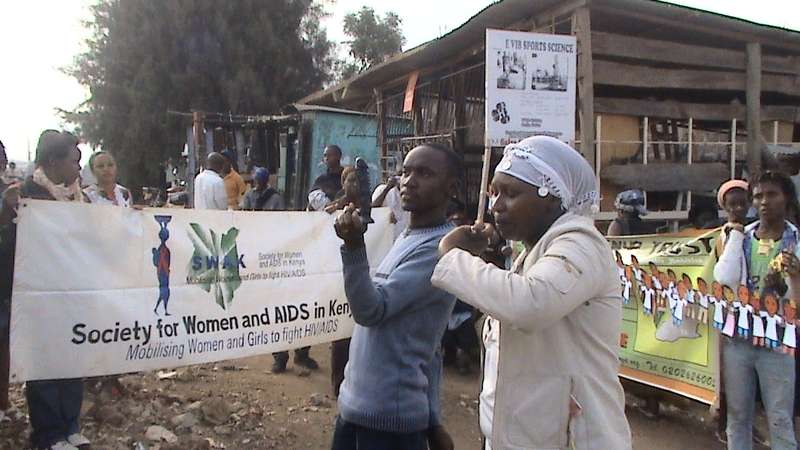
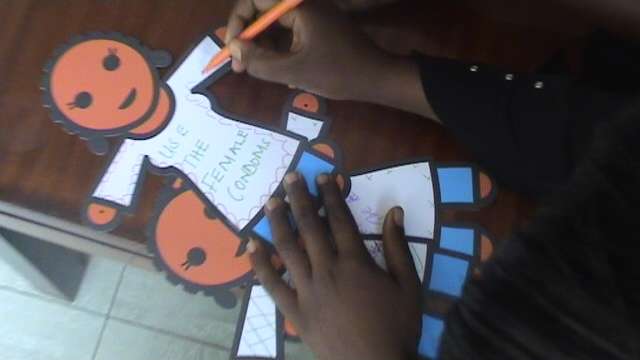
As the United Nations was urged to support and increase access to female condoms by the UAFC, women like Naliaka wonder why there is such a fuss around a piece of rubber that they know so little about. Rural women were crowding around an individual with a female condom to catch a glimpse of it during a recent Paper Doll Campaign event, an international campaign that aims to raise awareness regarding female condoms.
To some it is a strange device; others may have seen it but don’t know where to get female condoms from. In rural areas, women are know to wash and reuse female condoms since the ones they have were given to them by a community worker from a CSO who has never come back to distribute them again. The lack of information on the female condom among Kenyans and women in particular is alarming. For a long time the female condom has been a preserve of the elite in Nairobi whereas rural women, who are more vulnerable, have no knowledge on female condoms.
There have been numerous media and social mobilization campaigns aimed at popularizing the male condom and as a result it is available everywhere for a song.
As we part, Naliaka tells me of her son who is a casual labourer and enjoys a drink every evening till the wee hours of the morning. The son has a young family and Naliaka says she is always breaking up a fight between her son and his wife who he beats to a pulp every night she refuses to have sex with him. The daughter-in-law is concerned about her husband’s philandering and the dangers of HIV infection but ends up risking her life and that of her children by having unprotected sex in order to avoid a fight with her drunken husband.
Naliaka would like for me to educate her daughter-in-law and other women in similar situations on the female condom and how she can use it to protect herself when having sex with her always drunk husband. This will ensure that both the mother and her children will remain safe from HIV infection despite the risky behaviors of Naliaka’s son.
Female condoms ought to be made cheaper and available in every village shop, kiosk, pharmacy and store for all women to access the protection. The female condom enables women to exercise power over their sexuality and reduces their vulnerability to HIV infection.
As we bid goodbye to Zawadi, Aurora Juan and Sookjai - the paper dolls used for the International Paper Doll Campaign - I hope the gains made through the campaign will trickle down to Naliaka and her family and to all generations in Kenya.
This is a beautiful story Machichi. Way to go on increasing awareness on female condoms that have been around for a while yet there is virtually no information and access to them. Keep the fire burning and lets do more .
This is, indeed, a powerful and moving story. Thank you for writing it, Machichi, and thank you for your work to bring knowledge of female condoms to the women in Kenya who need it most. It is inexcusable that we HAVE a tool that is proven effective against HIV but that the women who need it to save their own lives cannot get it.
I work with commercial sex workers inMombasa-Kenya. many have knowledge about female condoms and prefer to use them, because they give them a sense of control and safety than male condoms. unfortunately they are not freely available.