
Both St. Kitts and Nevis have initiated processes to investigate the feasibility of a national health insurance scheme that would make affordable, basic care available to all citizens following a USAID report. Multiple key informants have indicated that there is a widespread interest in national health insurance, and seemingly strong political will to move proposals forward.
A USAID assessment of the St. Kitts and Nevis health systems carried out in May last year (2011), and disseminated to stakeholders recently, finds that, although the twin islands are committed to a reasonable level of spending on health, resource constraints make it necessary to put in place a pro-active process to establish a sustainable health financing model.
As of May 2011 when the USAID assessment was conducted, the Social Security Board (SSB) organized an internal steering committee to develop a proposal for universal health insurance, with a very ambitious timeline for scheme rollout, perhaps as early as January 2012. The SSB is being considered as a possible ‘home’ for national health insurance primarily because it has an existing revenue-collection platform and some experience managing medical claims.
The SS steering committee has been organizing missions to other Caribbean countries such as the British Virgin Islands, Jamaica and the Cayman Islands to learn about their approaches.
According to USAID’s assessment report, private insurance representatives have not been included in any dialogue as yet although they expressed interest in contributing to the development process. USAID further noted that government leaders may be able to tap into private insurers’ expertise.
However, concerns over who will fund national health insurance have surfaced following the report. The VAT was very recently imposed and instituting a new health ‘tax’ seems nearly impossible.
“Who will bear the cost of national health insurance?” one respondent commented. “The culture of free care is very strong. There is uproar when you try to change this, and the politicians back down. In general moving from generalities to specifics and achieving consensus among varied political constituencies will be very challenging.”
Much work will be needed to arrive at a workable, politically feasible, economically sustainable model. Data on health financing are limited aside from basic budget estimates. There is a striking lack of information on health expenditure or healthcare costs especially in the private sector, and little tracking of how service utilization is linked with expenditure or health outcomes, according to the assessment.
Because private health data are not collected through surveys or routine information systems and no formal National Health Accounts (NHA) estimation has been conducted, the true level of private spending is unknown. Public funding for health primarily comes from general tax revenues. While only a small portion of public sector health funds are raised through direct fees to consumers, the vast majority of private health spending is estimated to be paid by households out-of-pocket.
Individuals with private insurance premiums are partially subsidized by their employer. Only few individuals buy private coverage.
The high level of out-of-pocket spending implies that families could be impoverished by catastrophic costs. Over the past decade, the WHO estimates that up to 40% of all health spending (or around 95% of private spending) has been paid out-of-pocket at the time of using health services or purchasing medicines in St. Kitts and Nevis.
Off-island care
In all the Eastern Caribbean small island countries, one particularly burdensome category of health care costs is off-island care. Advance tertiary care services such as cardiac surgery and advanced cancer treatment are not available on St. Kitts and Nevis. Individuals seek services elsewhere in the Caribbean or in the United States.
There was consistency in the perception that the available funding is far less than what is needed or requested.
Government employees receive free health insurance coverage provided by the National Caribbean Insurance Company (NCI) as a benefit of their employment. Approximately 4,000 government employees or 8% of the population are covered through this scheme according to respondents at NCI. The employees’ dependents are not eligible for coverage. Premium rates are set at US$30 (EC$80) per employee per month in 2011.
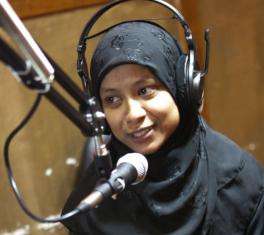
Photo/KC Pauline Ngunjiri
- A working group at a stakeholders workshop in January 2012, assessing the USAID assessment report.