

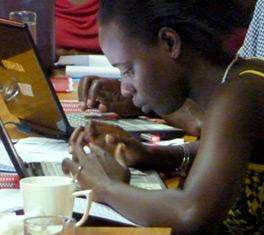
“I lost my hair and my fingernails and my palm become black,” says Ugandan Rebecca Mayengo, who talked to me about how breast cancer affected her.
Rebecca says she was living a normal life until she went to the hospital to find out why she was having swollen lymph nodes off and on and was advised to check for breast cancer.
Upon getting to know that something strange was slowly swelling in her breast, Rebecca was completely devastated.
“The doctor touched my breast, it looked suspicious. He took a piece of my flesh and it was confirmed that I had breast cancer. This created fear, anxiety and misery in my heart. I lived with a bleeding heart and in sorrow,” she says.
Rebecca says she was given two choices to go for mastectomy that involves cutting off her breast or lumpectomy where just the affected part of her breast would be removed. She chose lumpectomy, despite the fact that she was told about the risks of re-occurrence, because she did not want to lose one of her breasts.
After the surgery she was put on treatment including chemotherapy, radiotherapy and hormonal therapy. Rebecca says she was using drugs to control the production of female hormones, which she took for five years.
“Besides, being a survivor, you are high prone to re- occurrence of breast cancer,” she says.
However, Dr Kagwa Mugaga, the country advisor of non-communicable disease and HIV/AIDS at the World Health Organization, says most anti-cancer drugs are anti-proliferative, meaning most can damage DNA, depress bone marrow and growth, impair healing, and cause sterility and hair loss. Bleeding problem can also occur, as well as memory changes and damage to other organs.
“Most patients of cancer experience nausea, vomiting, loss of memory and lose of hair on their bodies but these side effects can also be managed,” says Dr Mugaga.
“The drugs used to treat cancer kill both the cancer virus and the good body cells, which makes people suffering from the disease [experience]…change in their bodies.”
Dr Mugaga says that many risk factors may increase the chance of developing breast cancer but the exact risk factors that cause cells to become cancerous are not re not yet known.
“Hormones play a role in many cases of breast cancer, but just how this happens is not fully understood,” he says.
He explains that some changes in DNA can cause normal breast cells to become cancerous. DNA is the chemical in each of cells that makes up the genes.
“Some genes contain instructions for controlling when our cells grow, divide, and die. Certain genes that speed up cell division are called oncogenes. Cancers can be caused by DNA mutations [changes] that ‘turn on’ or ‘turn off’ tumour suppressor genes,” he says.
Specioza Kabwengye, one of the survivors of breast cancer , describes the as ”a dark angel that claims happiness of one’s soul.”
“It hurts to face your pain in each day and I was so sad to see my world tear apart with all the pain, weakness and fatigue I bear. The presence of breast cancer was a terror that bruises your heart,” she added.
Specioza advices women to check they breasts one a month, a week after their menstrual periods and not to take lymph nodes for granted as they can be a sign of breast cancer.
“I am living a testimony because of being alive. I usually talk to people to go for early medical check-up to come out and screen for cancer in order to avoid it,” Specioza, who is also the chairperson of Uganda Women’s Cancer Support Organisation says.

This personal narrative is great. Women need to be more aware.