

“Men are a very important component of prevention of mother to child transmission (PMTCT) and when initiating or expanding PMTCT services at community level, there is no way that men can be left out” said Jennifer Gaberu, the Alliance Uganda project team leader at the launch of the networks model of strengthening the communities in PMTCT project for people living with HIV/AIDS in Nakaseke District.
Jennifer noted that “One of the barriers to antenatal care and PMTCT is that men are kept out the picture in these reproductive programmes. The lack of involvement of men means that PMTCT programmes are solving part of the problem and leaving a bigger problem not addressed.
“To combat this Alliance Uganda have started advocacy at grassroots so that men know that they should have a role to play in the healthcare of their pregnant women. PMTCT cannot be successful if a woman knows her HIV status, but the man does not know her HIV status. We are encouraging men to be part of the chain, and networking in the communities for this PMTC project.”
Alliance Uganda, with funding from ViiV HealthCare’s Positive Action for Children Fund has extended this service to Nakaseke district and it is working with groups of people living with HIV to improve male involvement.
Working at the grassroots
In Nakaseke, the groups which are working with Alliance Uganda are Asiika Obulamu farmers group located in Semuto, and leading a cluster of six sub groups. The other group is Bagundese PLHIV group, which is leading eight sub groups for this project and one is Ani Yali Amanyi PLHIV group managing four sub groups.
Getting men involved in PMTCT is just one part of what the groups will be doing to support the project. They will also be organising and implementing community engagement and advocacy meetings on stigma reduction and awareness of PMTCT services.
They will also follow up with women on PMTCT programmes to offer home based care, counselling and will promote referrals. This is in addition to administering their activities, providing support, supervision and monitoring their activities.
The project will run until March 2013.
Other groups in Nakaseke district plan to do community mobilisation and awareness campaigns through music and drama on ante-natal care, PMTCT, male involvement, stigma reduction, family planning and HIV/AIDS.
Who are the groups working with?
The PLHIV groups which Alliance Uganda is working with in Nakaseke will work with:
- local leaders
- health workers
- village health teams
- traditional birth attendants
- religious leaders
- pregnant women enrolled on PMTCT programmes
- community mobilisation groups
- vulnerable pregnant women
It is expected that they overall make 100,000 referrals and about 300 follow-ups.
Network Support Agents
Network Support Agents (NSA) are supporting the PMTCT project. NSAs are people living with HIV who work with Alliance Uganda to implement a range of HIV and AIDS projects. For the PMTCT project, they visit villages with HIV prevention messages for communities. They are also stationed at health facilities and explain to expecting mothers the benefits of voluntary counseling and testing (VCT) and enrolling for PMTCT. If clients of NSAs are found to be HIV positive, they are asked to join groups for PLHIV, if they so wish.
Particularly important is their distribution of ‘Mama Kits’. ‘Mama Kits’ contain basic materials to facilitate clean and safe delivery and reduce the risk of infection to the mother and her newborn baby. These include two pairs of gloves to prevent infections, two new razor blades to cut the umbilical cord, one bar of soap, two gauze pads for cleaning the eyes of the newborn, eight sanitary towels for the mother, nine oz of cotton wool and one polyethylene sheet on which the mother can give birth. NSAs also make a follow up with mothers to ensure that they deliver their babies at health facilities.
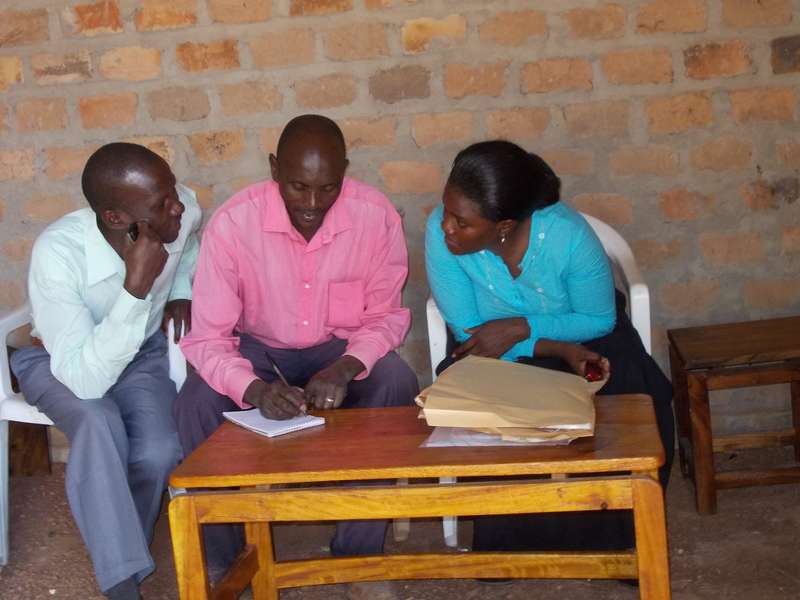 Two men listen To PMTCT guidelines
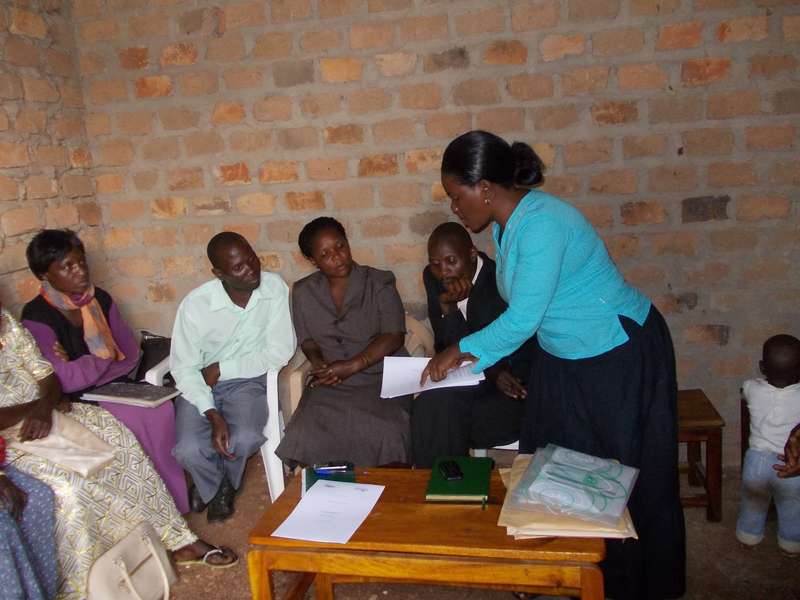 Men and women part of the PMTCT project