

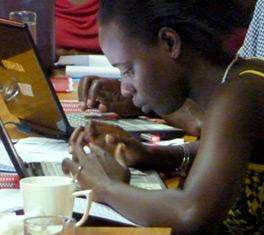
Women represent just over half of Zimbabwe’s population and the sustainability of our country’s development efforts hinges on women’s equal participation in the social, political and economic fabric of the nation.
After realising that women’s economic empowerment is key to achieving long term economic development and reducing poverty, the government of Zimbabwe recently launched the Broad Based Women’s Economic Empowerment Framework (BBWEE).
The framework has a number of interventions and strategic goals to enable women to participate in society, politics and economics but chief among all these aims is to improve access to technology for women.
The importance of information and communication technologies (ICTs) in stimulating socio-economic development is widely recognised.
Magaret Zinguze, director of E-Knowledge for Women in Southern Africa (EKOWISA), says: “ICTs can create new types of economic activities, employment opportunities and improvements in service delivery of healthcare among other services.”
Zinguze says universal access to ICTs can lead to a more capable workforce and increase economic efficiency. She added: “Networking, participation and advocacy within society and improved government-citizen interface can be enhanced through fostering transparency and accountability in governance.”
The advent of technology has ushered in a new era through the promotion of basic literacy and education thus providing access to knowledge, employment, banking and government services to Zimbabwean women who have suffered many years of inequality.
Dr Muchena, who is a former minister of Science and Technology, highlighted that ICTs can achieve desirable outcomes in a culturally acceptable manner by making pertinent information, services and assistance available to women within their homes or villages.
“The content should be tailored to address women’s concern through the reflections of their local knowledge and needs and to be of value in their daily lives, business enterprises and families responsibilities,” Muchena said.
Zunguze stresses that ICTs must entail a gender sensitive approach in terms of availability, affordability, convenient location, language and timing if it is to make a major impact in women’s lives.
ICTs are also potent tools for bridging the gender divide. A well known ICT guru Eliada Gudza, executive director of World Links Zimbabwe, said ensuring women equitable access to ICTs is also important to prevent their further marginalisation.
“Tackling the issues of women’s access to technology means encouraging the design, development and delivery of gender sensitive content, which is usable to enrich lives. ICT related services such as airtime retailing and mobile handset repair centers are suitable for women’s participation and can play a key role in their empowerment,” said Gudza.