

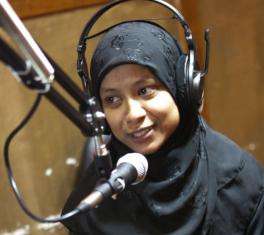
As Women Deliver delegates gather in Malaysia this week to discuss progress on women and girls’ health and wellbeing, Key Correspondent Hope Mafaranga recounts how one young woman living with HIV faces particular challenges in Uganda.
“I never believed I was HIV positive, I was forced to test in three different health centres but my results never changed. I did not imagine I could get HIV from my girlfriend,” says Jacinta.
“It puzzled me because I’ve been with my girlfriend for about seven years and I thought she was very faithful to me, I never imagined that she was dating men as well as dating me. I decided to get tested in secrecy. Honestly, when I discovered I had the virus I could not figure out how I got it as I had never slept with a man since I was born.”
When Jacinta, 19, from Kajansi in Kampala, discovered her lover was sleeping with someone else, she felt helpless. Despite having tested HIV positive, Jacinta never told her partner about her HIV status and was in a state of denial for a long time. She refused to get treatment, her health worsened and she wanted to end her life because she felt that her girlfriend had betrayed her trust.
Jacinta says: “I did not want to go to any ordinary clinic for treatment because I did not want to disclose to the counsellor how I got the virus given I am in a relationship with a woman which is taboo in Uganda.”
Uganda is currently debating an anti-gay law that would broaden criminalisation of same-sex relations, including tougher measures for people engaged in homosexual activity. If passed it would allow for people to be arrested simply on suspicion of homosexual behaviour, and would require doctors to report gay patients. It would also punish someone who rents their house to a homosexual.
“Finding out I am HIV positive brought physical and spiritual distress to me. The accompanying shame and discrimination prevented me from seeking treatment and leading a productive life,” Jacinta says.
“But then a friend told me about a clinic which offers services for HIV and reproductive health and which would not judge me for being a lesbian. Here I am treated with respect and I get all the services I need.”
Jacinta now attends the Mulago National Referral Hospital, where there is a clinic for groups most at risk of HIV. She is currently getting antiretrovirals and information on how to live a positive life.
After succumbing to society pressure to have a child, Jacinta and her partner agreed they would both try to get pregnant while remaining in their relationship. In fact they both managed to get pregnant and started attending the antenatal clinic together where they received services as a couple. Jacinta now has a one-year-old baby girl and is full of praise for the hospital.
She says: “It is my second home, when I come here I know I will talk to people who understand me and who are ready to listen to whichever problem I have, even when I leave I am confident that no one will talk ill about my decisions.”
But Jacinta does not like to talk about the father of her child and after getting pregnant she did not go back to him. “I only gave birth in order to fit in with society, I am still with my girlfriend and I don’t want anything to do with men,” she says.
Jacinta worries about the ever increasing HIV rate among women of reproductive age. “Many young women are getting the virus which gives me sleepless nights and I wonder if we will ever have an HIV free generation,” she says.
According to the 2011 Uganda AIDS Indicator Survey, HIV prevalence among women aged 15-49 is 8.3% compared with 6.1% for men.
Jacinta says: “HIV is a curse. It killed my three uncles, who had wives and children, and many of my friends have died and of course I also will soon die.”
Margaret Ayebare Mugasho, the supervisor of the hospital’s clinic for people most at risk, is angry with the bill that is before the Ugandan parliament to criminalise gays and lesbian in the country.
She said: “If that bill is passed into law it will automatically abuse people’s rights. We must stand and reject it in order to protect people who have same-sex relations. We should be providing special attention and support so they can fit into society.”

WOW, THIS IS INDEED INTERESTING. THANKS HOPE
Hope, this is good! Thanks.
Ivan