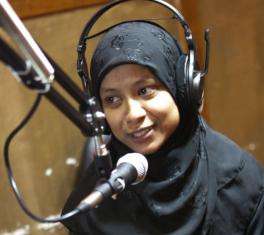
“I am safe, don’t worry.” This is how my friend Wilhemina, from Sierra Leone, always ends our mails. Whenever she says so, I smile with relief.
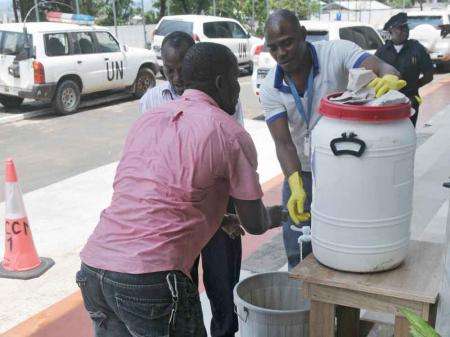
The World Health Organization (WHO) reports that since December 2013, when the first Ebola Virus Disease case is believed to have occurred in Guinea, more than 5,000 people have had a confirmed or probable diagnosis of the disease. Of these people, 3,088 have died (as of 23 September) in the three most affected countries – Guinea, Sierra Leone and Liberia. So far, no cure has been found for the disease, which is transmitted through contact with the bodily fluids of a patient.
This extremely challenging situation is also threatening treatment for people living with HIV, as Ebola infection control measures disrupt access to health facilities. In Liberia, people living with HIV in the capital Monrovia and the surrounding area can now only access the drugs they need at the offices of the National Aids Control Program, rather than at their various treatment centres, as before.
This means patients from remote areas have to travel to the capital city to receive their treatment, facing high transport costs. Also the high cost of living, including transportation and food, threatens patients’ nutritional conditions. The Liberian Network of People Living with HIV (Libnep+) said the situation has increased the number of AIDS-related deaths.
Lack of health staff
The primary reason for Ebola’s rampant spread in West Africa lies in the weakness of health systems, in particular a shortage of trained health staff. According to Global Health Africa, the World Health Organization recommends, as a minimum standard, one physician for every 5,000 inhabitants of a geographic area. Many West African nations fall far short of this.
This staffing crisis is also present in nursing and hospital administration. According to World Bank data, Guinea had just one healthcare worker per 10,000 people in 2010, with Liberia and Sierra Leone employing even fewer. It is the same story in Cote D’Ivoire. Dr Allou, from Abidjan Central Hospital, said: “Many sub-Saharan African doctors and healthcare workers who stay in their countries to help their compatriots face supply shortages, low pay and a lack of government spending on healthcare.”
Another problem is the fact that health workers are particularly vulnerable to Ebola, as they can get infected when caring for patients. This further weakens health systems, as medical staff become sick. According to a WHO situational assessment, two hundred and forty medical staff have been affected by the virus in Guinea, Sierra Leone and Liberia – a vital resource these countries cannot afford to lose. For example, my friend Wilhelmina’s sister, who is a midwife, contracted the disease while caring for a patient. She is currently in a quarantine centre.
Disruptions in care provisions
In an address during a high level emergency meeting at the United Nations on the Ebola outbreak, Liberian president Ellen Johnson Sirleaf said the Ebola virus in her country had killed over 1,700, including “85 trained to save lives.” She added that the projected losses from the virus threaten to “reverse our gains in malaria control and child and maternal mortality.”
I was told by my friend that the only pediatric referral hospital in Sierra Leone has been closed since 18 August after a young child, admitted to the emergency department for two days, tested positive for Ebola. It is clear that one of the direct consequences of the outbreak is that children with treatable and preventable diseases, such as malaria and diarrhoea, will die at home.
Treatment access under threat?
Children who are living with HIV have also been affected by the Ebola outbreak. UNICEF Sierra Leone reports that children on antiretroviral treatment have been unable to get to healthcare facilities to access their treatment, as fear around Ebola has made families hesitant to take them. To address this, programmes by UNICEF and Solthis (Therapeutic Solidarity and Initiatives against HIV/AIDS) are helping to deliver treatment to children in their own communities.
The outbreak is also disrupting other aspects of the HIV response, such as efforts to prevent stocks of antiretroviral drugs from running out. Libnep+ said current stocks of antiretrovirals in Liberia will last for just six months while in Sierra Leone, the National Network of People Living with HIV was about to set up community treatment observatories to prevent drug stocks running out and increase treatment coverage. Due to the Ebola outbreak, the project has been delayed until the situation improves.
While responding to Ebola is a priority, governments must put emergency mechanisms in place to ensure the continuity of health programmes, such as monitoring the treatment of people living with HIV. It is vital not to let Ebola reverse the achievements of the HIV response in West Africa.
Read about HIV and the post 2015 development agenda

The issue of lack of health staff is common in most developing African countries.many health personnel run away or ask a leave during an out break like Cholera and Ebola which kill within hours. They fear to get infected with the disease and in Uganda we have so far lost a number of Doctors due to Ebola out break.
Sad news that some people living with HIV/AIDS are affected with Ebola. WHO should come up and help the helpless people. We are scared
If UNICEF has come up with an idea of helping people living with HIV/AIDS to deliver medicine to their homes then it is an encouraging activity.