It’s a hot day in Kisumu, a busy town on the shores of Lake Victoria in western Kenya. As I walk down a crowded street I notice that people are staring at us.
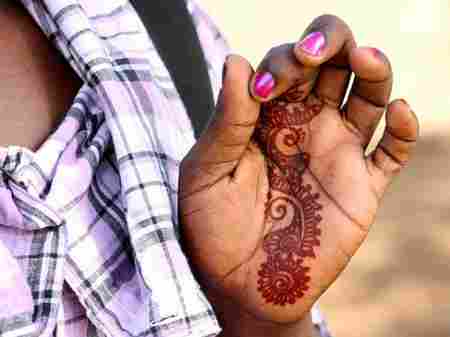
Lily tells me to keep walking. Someone is calling her names. It’s obvious that she’s attracting attention. Physically, Lily looks like a man. Only her hands, which are decorated with nail varnish, a henna tattoo, and bracelets, give away the fact that she feels more like a woman.
Lily tells me she has always felt different, although she never realised why until she was a teenager. Lily’s childhood was not easy. Like so many lesbian, gay, bisexual and transgender (LGBT) people in Kenya and other African countries she was rejected by her family and ran away from home when she was 14. With hardly any support or money, she started doing commercial sex work a few years later to make a living and pay for her school’s tuition fees.
Being diagnosed with HIV
‘Most men would offer me more money if they could have sex without a condom. Not realising the risks, I often agreed’, she tells me.
Four years ago, Lily was diagnosed with HIV. She’s not the only one. One in five men who have sex with men (MSM) and transwomen in Kisumu has HIV.
Lily’s friend Kennedy tells me how the situation got out of hand a few years ago: ‘At some point, my friends were dying one after another’, he says. ‘No one dared to admit they were suffering from HIV/AIDS. They all pretended it was malaria or tuberculosis. As a result of this shame and denial, the disease spread only further.’
Lily, Kennedy, their close pal Victor and two more friends (who have died of AIDS since) decided something needed to be done. So they founded the Men Against AIDS Youth Group, or MAAYGO.
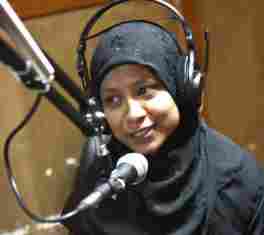
Together with a team of volunteers they create awareness of HIV by teaching their peers about the prevention of STIs, hosting a weekly ‘safe sex’ radio talk show, and offering free HIV testing and counselling at night in busy night life areas in town.
Human rights abuse
Although the group predominantly works with the local LGBT community, it also provides support to male and female commercial sex workers, drug users, and anyone who is interested in finding out more about HIV prevention.
In December, 2012, the group received its first MTV Staying Alive grant. MAAYGO is now a thriving organisation at the heart of the LGBT community in Kisumu.
But it has not always been an easy ride, however. Only a few months back, the group’s office was broken into and the police arrested three of its members, without any explanation. They spent a day in prison, where they were harassed, threatened, and beaten.
During that same period, Victor was attacked and raped by four men. ‘They told me that being gay is a sin and that this would teach me a lesson. I’ve been to the police but I’m still waiting for them to file a case’, he tells me with a trembling voice.
Thriving LGBT community
MAAYGO has recently moved to a new, safer office space and has hired security guards for its activities. Ever since, things are going well. Their peer education sessions are attended in large numbers and their new office has become a popular gathering space for young gay men and transwomen in Kisumu who are looking for information on STIs, free condoms, or to meet likeminded people.
A lot of work remains to be done before LGBTs in Kisumu and in the rest of Kenya are fully accepted. But it is hopeful to see how, with relatively few means, a young organisation like MAAYGO has created a safe environment where LGBTs can talk openly about their sexuality and safe sex and where they can just simply be themselves for a moment without having to worry about what others might think of them.
Read more about HIV and human rights
This story was reproduced with permission of the MTV Staying Alive Foundation. For more stories from MTV Staying Alive visit their blog.
This story was reproduced with permission of the MTV Staying Alive Foundation. For more stories from MTV Staying Alive visit their blog.