HIV and AIDS
From local meetings to advocacy campaigns, KCS document the way in which communities are currently responding to HIV and AIDS. KCs will also report announcements of new HIV testing and prevention schemes and highlight the successes and failures of existing programmes. The impact traditional healers, ARV stock-outs and expired medication have on the lives of those living with HIV is also reported, as are spikes and declines in HIV prevalence rates. KCs also document what life is like for people living with HIV and the impact culture and religion has on their choices around treatment and care. KC stories often examine the links between poverty and HIV, as well as the links between maternal health and HIV, told through the lenses of community campaigns and individual stories.
Showing 1 - 8 of 414 articles
It is a common fact in Africa that parents rarely or do not at all engage their children in sexual reproductive health and HIV education. This has been one of the major contributing factors to increased HIV cases amongst the adolescents.
more →
Cambodia: The HIV/AIDS Coordinating Committee (HACC) has recently received reports which suggest that the way in which the Safety Village Commune/Sangkat Policy Guideline is being executed is posing a threat to the implementation of vital HIV prevention programmes and corroding effective partnerships between local authorities and non-governmental organizations (NGOs).
more →
From www.monitor.co.ug
Over 730 people living with HIV in Uganda’s Barr Sub-county in Lira District were on Wednesday (13 July) left stranded at Barr Health Centre III where they had gone to access specialised medical attention. There was no HIV specialist to attend to them. The group, comprising children, pregnant women and the elderly, complained that for the last one week they were denied access to drugs under unclear circumstances. “The situation here is terrible. It is just a matter of life and death,†a patient, Ms Lillian Akello, said.
go →
A mother in Gulu, northern Uganda tells of her ordeal of dating and marrying an HIV-negative man, struggling to disclose her HIV status, protecting her baby and carrying out self-counselling.
more →
When a pharmacy has no medicine on the shelf, it is known as a drug stock out. It may happen for one medicine or, in the worst case scenario, for all medicines. Therefore essential medicines will not be available for those who need them. In Uganda essential medicines are not available in 32-50% of Government health facilities across the country according WHO and HAI (2008).
more →
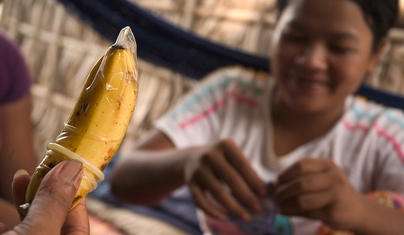
Farmers in Mwizi sub county, Mbarara district, Western Uganda have been urged to embrace the use of condoms.
more →
Men have been lining up to be circumcised at Bwizibwera Health Centre IV in Mbarara District, Western Uganda but failing power supplies means the service has been suspended. KC Kateregga reports.
more →
Every year, 850,000 girls and women die from pregnancy complications in developing countries. Yet HIV services are causing women to access healthcare they normally wouldn’t and it is hoped this is helping to reduce maternal deaths.
more →