

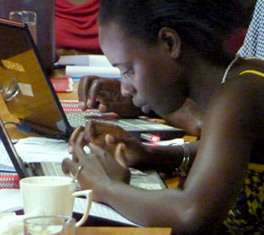
A workshop has been held in Uganda to address maternal and child health.
The event, organised by International AIDS Alliance with support from the UK Department for International Development (DFID), took place at the Silver Spring Hotel last week (June 11 and 12). A total of 16 ‘sub-grantee’ organizations, civil society organisations receiving funds from the project, met to discuss how a project on maternal neonatal and child health (MNCH) should be carried out.
Key Correspondents present included Ssebunya Kizza and Diana Kintu, who took the sub-grantees through a questionnaire to document previous project experiences. The KCs focused on any training and awareness-raising relating to maternal, new born, sexual and reproductive health and HIV, which the sub-grantees had already carried out.
The exercise brought to the surface how sub-grantees intervene in advocacy, HIV counselling and testing, peer education, sensitization, treatment, economic empowerment, HIV prevention, drama outreach, sports, dissemination of information, education and communication materials, family planning, stigma reduction, preventing mother to child transmission and encouraging condom use.
The KCs used the KAP approach, which measures knowledge, attitude and practice, to explore any significant changes attained in respect to the knowledge, attitudes and practices of project beneficiaries. The KCs looked at who the groups were targeting, if there was an increase in knowledge levels and in which groups any increase of knowledge took place. The questionnaire also documented where the groups are located, whether they are monitoring achievements, which attitudes had changed, how were they changed, which groups practiced what they were trained in, which tools were used and how long it took for follow ups to occur. Finally, the group looked at how the sub-grantees were going to put these measures into practice relating to the (MNCH) project.
They also discussed the sustainability of activities after a projects closes, which was reported as being achieved mainly through training a network of support agents, peer educators, local council and religious leaders, people living with HIV groups and the uniformed forces. These focal groups later take responsibility to continue with the follow ups.
Dr. Nabiryo, who addressed the group, emphasized that sub-grantees had to think critically about how projects will be sustained at the end of the first six months and to work in corroboration with communities, local leaders, existing government and non government structures to attain the desired success.