
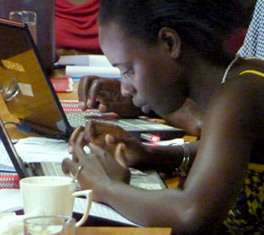
Civil Society Organizations representing health, HIV/AIDS, human rights, and women’s organizations gathered at Uganda’s constitutional court last week (July 20 2011) as judges began hearing the case being brought against the government for failing to prevent maternal deaths and denying people the right to health.
The campaigners’ petition argues that, by not providing essential medical commodities and services to ensure the right to health, the right to life and the rights of pregnant women, the government is violating the constitutional rights of Ugandans.
This is the third attempt to hear the petition before the court, which highlights the death of Sylvia Nalubowa from Mityana and Jennifer Anguko, a district councilor from Arua, both of whom died during childbirth. However, the State department’s failure to submit important affidavits from permanent secretaries in the Ministry of Health and Ministry of Finance, saw lead judge Deputy Chief Justice Bahegeine adjourn the hearing yet again.
It is now due to be heard at the next constitutional session, although Justice Bahegeine did not state when.
At the hearing, the Principle State Attorney Patricia Mutesi, who represented the government, told the court that the affidavits had not been filled because they related to the addition of a fifth party to the petition. He said that the order granting this fifth petitioner was only filed and served to the Attorney General on the day of hearing itself.
He added: “The fifth petitioner had substantive and fundamental evidence and we thought that it would be wise to respond also to this evidence together with our other affidavits. We are waiting for two new affidavits, one from permanent secretary Ministry of Health and Ministry of Finance. We have applied for more time to file these affidavits, which present government side.”
However, lawyer Kabanda David, who represent the petitioners, told court: “We were ready for the hearing but it seems the state is not ready for the hearing, they applied for more time. [Do] they need to get consultancy so that they can write affidavits in time? We have been serving them even when we had a scheduling at court but they never turned up. We said no to the court, not to give these people more time, because we gave them more time already. We filed this petition on 3rd March 2011, we are in July now and court vacation is on the way and they are now saying we fix after the court vacation.”
The petitioner that was added will not add anything or affect anything apart from adding a person to the petition, he added.
Country Director of International HIV/AIDS Alliance Uganda, and activist for the case, Leonard Okello said: “It is a shame that, with all the resources Ugandan government has and all the monopoly resources, it has not been able to use those resources to file two affidavits so that the court proceedings can take place.”
There’s a lack of seriousness and willingness on the part of government to take the issues of maternal health seriously, he added.
Many reports of additional maternal deaths from across Uganda have come to light since the death of two mothers included in the petition. These deaths are human rights issues; women are continuing to die everyday in Uganda. An average of 16 women die every day in childbirth or soon after.
The panel consisted of five judges: Deputy Chief Justice Alice Mpagi Bahegeine (the lead judge), Justice of Appeal judges Byamunsi, SBK Kawuma, Arachi Amoko and Remy Kasule.