
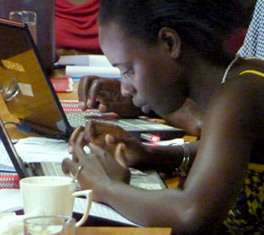
Kasonde Munga, who lives in Misisi Township, Zambia, is a mother of three. She is physically disabled and HIV positive. She had three other children but they died soon after delivery due to complications arising from her positive status and disability. Kasonde did not know her status when most of her babies were born. All her children were delivered at home with the help of her elder sister except for her most recent.
During her last pregnancy Kasonde was encouraged to seek antenatal care at the nearest health center by her colleagues. When Kasonde found out her status she informed her husband who hesitated to go for a test at first but later on tested and was found to be positive.
After discovering she was HIV positive, Kasonde went through the Prevention of Mother to Child Transmission (PMTCT) program there. Her youngest, a son who is now one, is HIV negative.
When I asked Kasonde why she had chosen to deliver her previous babies at home, she replies: “I could not afford to get the required items requested by the health personnel like Jik [disinfectant] , baby wear, soap, gloves and plastics as my husband is a casual worker”, adding that what little income her husband getss goes on food and rent for their one-roomed apartment.
Kasonde says she appreciates the fact that she learnt about PMTCT as she had no knowledge previously. She says this has made her see the need to deliver at the health center where skilled personnel can attend to her.
As Kasonde’s story shows, education is key to improving maternal and neonatal health. Better knowledge of healthcare practises, expanded use of health services during pregnancy and birth, improved nutrition and increased spacing between births are all factors that are fostered by education in reducing maternal and infant mortality, according to the UNFPA 2005 State of the World Population report.
Education can influence factors such as consistent condom use, and contribute to an increase in contraceptive use and a reduction in sexual partners, thereby contributing to lower reproductive risk. Educated women tend to develop a better understanding of formal institutions, especially those related to healthcare provision, which in turn encourages health seeking behaviours. Educated women are also more likely to claim rights and participate more in social development.
According to a Population Action International 2007 report, maternal and infant mortality is the fourth largest killer after HIV and TB. In Zambia there are 34 per 1000 neonatal deaths. A total of 80% of health facilities provide regular antenatal care services and family planning, while 46.5% deliveries are done by skilled attendants.
Now that the DFID funded Maternal, Neonatal and Child Health project more needs to be done to address maternal, neonatal and child health problems in Zambia. What we have covered is just a tip of the iceberg.