

Economic uncertainty, stagnating donor assistance and the slow increase of country spending for health in many parts of the world (1) continues to put pressure on health programmes in low and middle income countries.
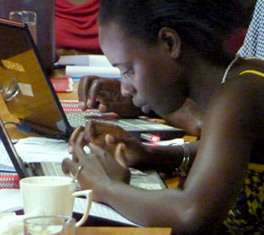
Successful initiatives like the Global Fund to Fight HIV/AIDS, TB and Malaria have been hit, albeit in this instance under a cloud of more complex and contentious circumstances (2). As Laurie Garrett suggested recently in Nature magazine, the fight to define the concepts of sustainability and efficiency has heated up and is hitting crisis point (3). While this is true across health systems, it is of particular importance to the health workforce, the theme of the recent Irish Forum for Global Health (IFGH) 2012 Conference, which took place early this month (February 2012) in Dublin.
Sustainability at IFGH 2012
There is nothing new about this fight or about the reality for organisations and individuals when financial streams stagnate or cease to exist altogether. Research conducted by Aisling Walsh, Chishimba Mulambia, Joanna Hanefeld and Ruairí Brugha, and presented at the IFGH 2012 conference, highlighted how the cessation of World Bank Multi-Country AIDS Programme (MAP) funding forced community-based organisations (CBOs) to cut back on HIV services offered to populations in Zambia (4). While MAP funding supported income-generating activities as well as HIV services, an initiative designed to promote CBO sustainability, this occurred in a context of weak infrastructure and without the requisite training to promote sustainability beyond the life of the grant.
Interestingly, and despite sceptical perceptions that CBOs were only established to capture funds made available for HIV, the study found that not only were the CBOs established prior to the availability of MAP finances, but that they continued to exist after the cessation of funding. The clear take-home message from this study is the importance of working with and building the capacity of existing community structures and CBOs rather than creating new mechanisms. The presenters suggested that this can promote the sustainability of CBOs, especially in terms of their ability to avail of new funding or income generating opportunities to meet the needs of the communities they serve.
Several other engaging, high-quality presentations and posters during the conference focused on sustainability, though applying vastly different interpretations. For instance in the form of cascade training where Northern personnel train their Southern counterparts, who will then take on the work and have new skills once the Northern personnel or organisations leave.
This and several other examples provided during the conference highlight what appeared to be some confusion with the term ‘sustainability’. It was often used interchangeably with other concepts, like capacity building. In other instances, there was an almost idiosyncratic, feel-good application of ‘sustainability’ to short-term, externally financed health projects, where it was not made clear how those interventions would be sustained after the project ended.
This is not to take away from the immediate value of such projects. Rather, it questions the loose use of the term sustainability, and highlights how the term has become fuzzy, and often not backed up by evidence to show: i) how infrastructure or mechanisms have been put in place to promote sustainability; ii) instances where projects, programmes or organisations have transitioned to a sustainable status or the barriers that prevented them from doing so; iii) or where the financial flows come from once current financial support ends.
Sustainability in a global context
Defining sustainability is a critical decision that ultimately impacts the longer-term health prospects of populations. Indeed, this heated battle has been going for some time in global health. Prior to establishing the Global Fund, for example, there was significant debate around the sustainability of a proposed initiative that sought to rapidly roll out and increase the number of people on anti-retroviral therapy. While important questions were raised about the possibility of scaling up treatment in the context of weak health systems, there was also a reticence on the part of some donors to assume the ‘moral mortgage’ of treatment - a long-term intervention that would have catastrophic consequences were it to be abandoned.
Another key sustainability issue is investment in the health workforce. While global health initiatives like the Global Fund have been reluctant to finance recurrent health workforce costs, they have developed shorter-term ways to support the health workforce. These include wage top-up incentives, financial support for training, skills and task-shifting, or funding for human resource management, the results of which were documented by a number or presentations at IFGH 2012 (5). While shorter-term support may have lasting effects, the sustainability of such investments or remuneration packages beyond the life of projects or grants are not being adequately dealt with, either by donor organisations or those applying for grants (6).
In trying to tackle the issue of sustainability, a number of proposals have been developed, including the recent introduction of co-financing models that gradually seek to replace external funding with domestic resources. The advanced market commitment for pneumococcal vaccines managed by the GAVI Alliance is an example of this approach to sustainability (7). Co-financing models are certainly a meritable policy option, and also lend support to those arguing for governments to increase domestic spending on health, including for their health workers. But given the budgetary reality in many countries, especially on the African continent, defining sustainability in the narrow sense of domestic health interventions becoming independent from external support any time soon is highly problematic. As Ooms (2006) argues, increasing both national and international financial commitments to health care in poor countries are essential to deal with the chronic health crisis, “and sustainability—if narrowly defined as independent from international aid—is an illusion” and a recipe for failure (8).
Ireland’s response
For Ireland, during IFGH 2012, Irish Aid representatives confirmed their long-term commitment to global health. The announcement by Ireland’s Minister of State for Trade and Development that Ireland is joining the European ESTHER Alliance (9) is a welcome indication of Ireland’s commitment to strengthening health institutions and the health workforce.
But in seeking appropriate approaches to sustainability in the long term, Ireland must avoid giving with one hand, while taking with the other. Irish compliance with the WHO Global Code of Practice on the International Recruitment of Health Personal is essential to mitigate the critical shortage of health workers in low and middle-income countries. Currently, Ireland’s dependence on non-EU trained doctors and nurses ranks it highest among OECD countries. And within these high-income OECD countries, “over half of the doctors from 11 of the poorest Caribbean and African countries are practicing” there (10).
As IFGH 2012 presenters confirmed, health workers are the cornerstone of long-term sustainability of essential health care. Ireland should not exacerbate the existing crisis.
References
1. IHME (2011) Financing Global Health 2011. Institute of Health Metrics & Evaluation: Seattle. URL: http://www.healthmetricsandevaluation.org/publications/policy-report/financing-global-health-2011-continued-growth-mdg-deadline-approaches
2. See recent issues of the Global Fund Observer for more in-depth coverage: http://www.aidspan.org/index.php?page=gfo
3. Laurie Garett (2011) Global health hits crisis point. Nature 482(7383). URL: http://www.nature.com/news/global-health-hits-crisis-point-1.9951
4. GHIN (2011) The Evolution and Sustainability of Community Based Organisations Providing HIV and AIDS Care and Support services in Zambia. Global HIV/AIDS Initiatives Network. URL: http://www.ghinet.org/downloads/CRAIDS_Report_Zambia_Final.pdf
5. IFGH 2012 Book of Abstracts: http://www.globalhealth.ie/uploads/files/IFGH%20Conf%20Abstract%20Book%20ABSOLUTE%20FINAL%20C.pdf
6. Vujicic, M., S. E. Weber, et al.(2012). “An analysis of GAVI, the Global Fund and World Bank support for human resources for health in developing countries.” Health Policy and Planning. URL: http://heapol.oxfordjournals.org/content/early/2012/02/13/heapol.czs012.abstract
7. GAVI AMC. URL: http://www.gavialliance.org/funding/pneumococcal-amc
8. Gorik Ooms (2006) Health Development versus Medical Relief: The Illusion versus the Irrelevance of Sustainability. PLoS Medicine 3(8). URL: http://www.plosmedicine.org/article/info%3Adoi%2F10.1371%2Fjournal.pmed.0030345
9. European ESTHER Alliance website: http://www.esther.eu/
10. Ruairí Brugha (2012) WHO Global Code of Practice on the International Recruitment of Health Personnel- Implications for Ireland. Presented at IFGH 2012. URL: http://www.globalhealth.ie/index.php?i=303&PHPSESSID=48cb881c0c3d3424be996e76b3375a7e