A shortage of essential drugs in Zimbabwe has been identified in a pilot project for a mobile data gathering tool used to fight dengue fever in the Amazon Basin.
The Humanitarian Information Facilitation Centre (HIFC) used the Nokia Data Gathering system (NDG) in Zimbabwe for the first time last month to collect, analyse and disseminate humanitarian data.
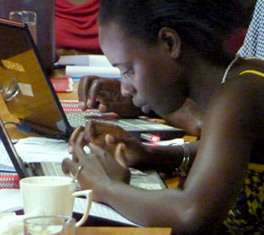
HIFC worked with 13 volunteers from Community Working Group on Health (CWGH) in five districts to investigate the availability of essential drugs at health centres in rural communities.
Natasha Musonza, HIFC Programme Officer, said: “HIFC launched the NDG tool in Zimbabwe to determine its usefulness to humanitarian organisations in the gathering, analysis and sending of data and information for effective interventions.
“During the pilot exercise, we discovered that the communities we surveyed suffered a shortage of essential drugs.”
She added: “It is our hope that the NDG tool will be adopted by humanitarian organisations on a wide scale to get useful results like the ones we obtained during the project.”
Musonza said the NDG reduced the “labour and margin of error associated with paper-based surveys while the quickness that comes with it is essential to save lives, particularly in emergencies”.
The system is setting the pace for improvements in the gathering, sending and analysis of information vital for humanitarian interventions and decision-making.
Plan Finland used the NDG in Kenya to speed up the administration of identity documents to children in Northern Turkana, in the Horn of Africa.
A similar project managed data vital to improving water supplies.
Itai Rusike, Executive Director of the CWGH, confirmed the participation of field officers from his organisation “to facilitate the launch of this interesting pilot project” but declined to give his organisation’s views, saying: “HIFC is better placed to comment”.
Field researchers feed information into mobile telephones, avoiding the hassle of filling in paper-based questionnaires and the possible loss of survey results.
The data from electronic questionnaires is immediately transferred to pre-existing databases in computer servers.
Musonza said the NDG is “ideal in politically hot areas because the data is sent to the database right away whereas paper work can be lost when it is confiscated by people who view NGO work with suspicion.
“Humanitarian response is about saving lives and improving the welfare and rights of people. In this regard, humanitarian organisations should be quick to harness any technology that makes saving and improving livelihoods easier.
“The NDG tool is thus one way of revolutionising humanitarian responses.”
She added that HIFC was sharing its findings with partners in the humanitarian community by training staff, giving technical assistance and lending software to organisations involved in projects.
However, the tool comes with numerous challenges in a country where internet access and mobile telephony reception are poor and can hamper data transmission, particularly in remote areas.
Musonza bemoaned the reluctance of mobile telephone network service providers to share information relating to areas that have reliable network connectivity with NGOs.
Various organisations have already expressed their interest in adopting the NDG but poor funding to the humanitarian sector could restrict use of the tool on a wide scale in the near future.
Bianca Tolboon, Project Coordinator at Médicins Sans Frontières Belgium, has already enlisted HIFC to train her staff to use the NDG.
She said: “Even though we have not adopted it [the NDG] yet, we are convinced that it will help gather information quickly.
“If done properly it will reduce the time involved in carrying out surveys and is more accurate than paper-based surveys. We would like to try it.”
However, Tolboon warned that “some people in politically unstable areas can misunderstand the use of phones to gather data and this would tend to make field officers vulnerable to harassment”.
welcome to the club.
wallace