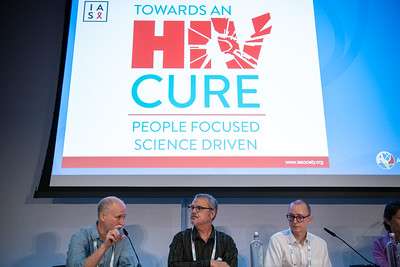
Studies presented at the International Aids Society Conference (AIDS 2018) conference in Amsterdam, Netherlands which was hosted from the 23rd – 27th of July sent a strong message about the importance of prevention to the world. Presentations not only focused on basic and clinical research, but also the implications of real world implementation and practice. With an estimated 1.8 million new infections in 2017, there was widespread agreement at the conference that the current pace of scale-up for proven prevention initiatives is far too slow to reach future targets, and must be increased rapidly to make lasting gains against the epidemic.
On the prevention agenda, researchers put forward work on on-demand pre-exposure prophylaxis (PrEP), which showed the benefits of using the medication when needed, as an alternative to chronic intake. The APPROACH vaccine trial research study showed that high and persistent immune responses to HIV were elicited by a vaccine. This places prevention through vaccine firmly in the realm of possibility. A third study showed that despite almost 75 000 condomless-sex acts in gay sero-different couples where the positive partner was on suppressive anti-retrovial treatment (ART), zero cases of inter-couple HIV transmission were found. This provides further evidence for the undetectable-equals-untransmittable (U=U) philosophy.
Eswatini has one site (FLAS) that has been enrolling to a total of 148 female participants for a period of 12 months. Next is a follow-up period of four years.
During the launch of the new multisectoral HIV National Strategic Framework, 2018-2023 in June this year, NERCHA’s Executive Director Khanyakwezwe Mabuza boldly stated that “the country is fortunate to have available, many of the tools necessary to achieve zero-new infections in Eswatini.” The minister of health made mention of the need to focus more on, “priority groups and individuals including pregnant and lactating women, young women aged 16-25 years, sero-discordant couples (where one partner is living with HIV), MSM, FSWs, and clients with STIs”.
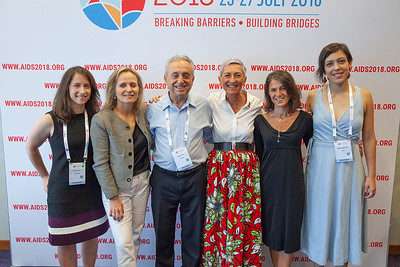
The Netherlands, Amsterdam, 24-7-2018. Press Conference HIV Prevention Highlights Research. L-R Rebecca Zash, Sharon Lewin, Pedro Cahn, Linda-Gail Bekker, Sarah Fidler, Mariana Veloso Meireles. Photo: Rob Huibers for IAS. (Please publish always with complete attribution).
The kingdom of Eswatini is taking on the issue of prevention more seriously than ever before. However, like in the world over, there are more barriers to the accessibility of healthcare.
Prevention of HIV is highly regarded as a worthy investment of research expertise and resources. Although socio-economic issues continue to shape the landscape of the epidemic alongside pharmaceutical and policy concerns, prevention as a concept is complicated and teaches us that the road to a cure must be constantly redefined.
Amsterdam is a fast-track city that has met the UNAIDS 90-90-90 targets for HIV diagnosis, treatment and viral suppression. But while the AIDS 2018 host city continues to improve its strong HIV response, just a stone’s throw away from the conference headquarters, in Eastern Europe and Central Asia (the EECA region) the annual number of new HIV infections has doubled over the last few years. This kind of trajectory can also be seen in parts of the global south where the psychosocial dynamics of dealing with the virus generate high levels of stigma.
Stigma and discrimination are major drivers of the epidemic in the EECA region, where one-third of new HIV infections are among people who inject drugs. AIDS 2018 provided a high-profile platform for researchers and advocates from the region addressing innovation around HIV and substance use, advances in harm reduction and drug policy, and the human rights of people from Key Populations. These learnings could provide generous insights into the dynamics of substance abuse, stigma and its implications for HIV infection rates in the Southern African context as well.
A disheartening discussion around HIV criminalisation brought another barrier to prevention under the spotlight. HIV criminalisation is a growing concern in the EECA region, as well as in other parts of the world where legal systems criminalise HIV non-disclosure and exposure or transmission. This, even in cases where there is no possibility of HIV transmission. The rationale for these laws was highly refuted (both systematically and scientifically) and instead tools to combat the stigma and injustice of HIV criminalisation pointed to more humane and just alternatives.
The road to preventing HIV seems better lit for all the efforts presented at this year’s AIDS 2018. It seems wise to hope that remaining resolute in our commitment to ending HIV and the social injustices that accompany it, will yield results that are not only effective but able to navigate the intersections of the times they will serve.

COMMENTS