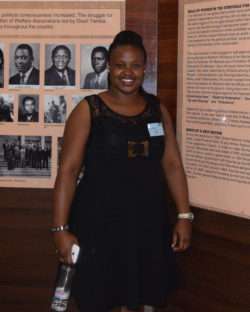
Bee Chihera has a lot of positive energy and makes everyone feel comfortable. She is a human rights activist and I’ve known her for two years. At no point would I have suspected all the difficulties she’d undergone in her transformation.
Chihera is a transwoman who has known she was in the wrong body from a very young age.
Growing up different
“From the time I was six years old I have felt and known that I did not want to be a boy. I actually liked playing with dolls,” she says. For her, it was not a surprising discovery. She’s always known she was different.
Not knowing what to do about how she felt, Chihera kept her secret: “I was outted by someone who found out that I was different. They told my uncles and parents. It made things hard for me.”
The reaction Chihera received from her family was nothing different from what most LGBT+ people face. Her family thought she was demon-possessed. Her grandmother was the only person who understood and stood by her: “My grandmother is my pillar of strength. She’s taken the time to know me better. I can’t imagine life without her.”
Despite her grandmother’s support, Chihera faced a lot of discrimination from family and her community. She was expelled from family decisions.
“My transformation journey has been too long. When it started, I didn’t know what to do about it.” Coming out is a continuous process. “When I decided to come out, I did so as a gay person. It was hard being in gay spaces because at first my experiences were different from what gay people were sharing. I felt like I was in the wrong place again. I went back to my vacuum,” she explains.
Trying to fit in
In some cases Chihera could not understand the jargon that was being used and that made it more difficult for her partake in the conversations. She felt like she was back in school where she was expected to behave like a boy. But she could not do it. 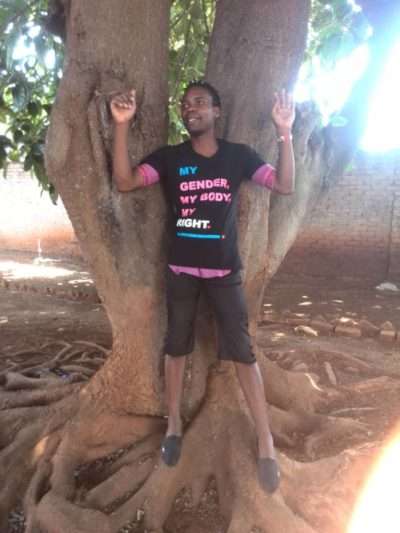
“Transformation is hard, I’m still in the process of transforming because you do not come out once, you come out every day,” she says.
At weddings and funerals people keep asking when I will marry someone or when I will have kids and I have to explain myself yet again.
Such questions have made family gatherings very uncomfortable. She’s faced the same problem at church where men and women sit separately. She fails to fit anywhere. Whether she chooses to sit on the men’s or women’s side she gets looks of disapproval from the congregation. As a result, she has stopped attending church altogether.
“It has been tough but I keep going”
Chihera identifies as a heterosexual transwoman, but the road has not been easy. Despite the hardships she goes through she is always in a good mood. “The struggle has been difficult. From school, I played with girls and teachers always criticised me about that. As an adult, I still get looks even when I walk into meetings,” Chihera explains.
As she speaks it is difficult to tell from her demeanour that she is relaying some very painful accounts of her life. Her voice remains strong and convincing. These traits are what has made her one of the most outspoken trans people in Zimbabwe.
“The gay community does not understand trans people and I have to deal with that as well as an activist… Sometimes when you think you have made it you still face challenges… Sometimes I even feel suicidal,” she says.
Chihera expresses how she wishes society would treat her like any other person: “I think lack of information and understanding contributes to how society reacts to trans people. The myths and beliefs we harbour as a society create a false image in the minds of people,” she says.
COMMENTS