You can’t make any assumptions about what pronoun someone uses based on their appearance.
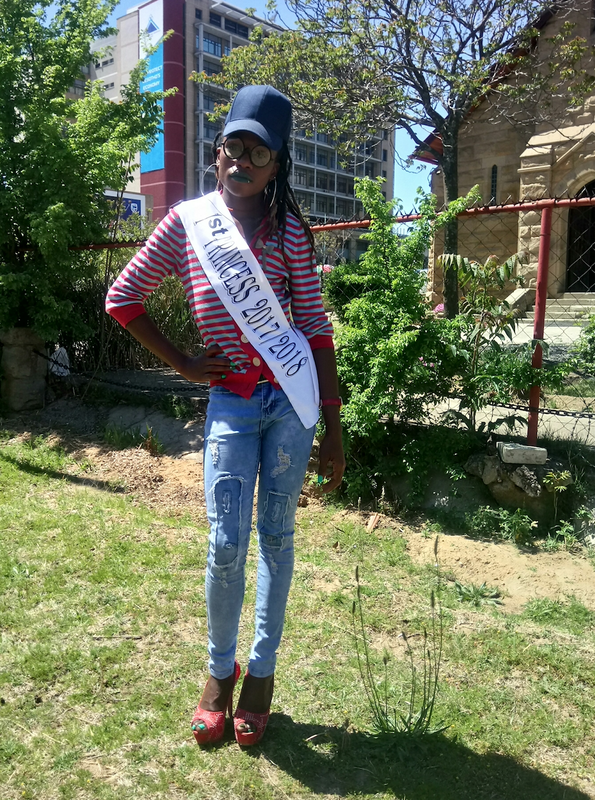
Relebohile Motaung was male-assigned-at-birth, but prefers to be called Layla. Society expected bowing down to peer pressure – to act like other boys do. However, this was in total disregard of how Layla felt and how she wanted to live. Like any other citizen born and raised in Lesotho, at some point Motaung had to go through the process of acquiring identity documents. This became an issue, especially when it came to ticking a gender-marker box. Identifying as a transwoman and being stuck with identity documents that contradict that identity, remains one of the most conflicting human rights issues.
“It is very important to ask someone’s preferred pronoun to make them feel comfortable with you – to talk about anything without fear,” expressed Motaung. Identification documents need to accurately reflect one’s gender identity. This is a human rights issue. The Declaration of Human Rights signed on the 10th of December, 1948 stipulates that “inherent dignity” and “equal and inalienable rights” are the foundation of a just, peaceful, and free world. It also declares that human rights are universal – to be enjoyed by all people, no matter who they are or where they live.
Most people are considered “cisgender,” meaning their gender identity matches their physical identity. Simply put, human beings who identify with the same gender as their biological sex are considered “cisgender”.
The general heteronormative narrative is: I was born with male parts (not to put too fine of a point on it) and I have always felt like a male. Yet an increasing number of people are experiencing a conflict between how they feel on the inside and how they present on the outside. Physical sex does not determine gender. In other words, genitals are not gender.
Rather than assume someone’s pronouns based on their presumed gender or the way they look, it’s vital to ask what their choice and / or preferred pronouns are.
It is trendy these days to refer to “preferred gender pronouns”. However, for many people, this is not a trend – their pronouns are not preferred, they are obligatory. They are a matter of identity. It’s not that there is anything wrong with gendered pronouns; it’s just that the pronouns “he” and “she” come with a certain set of expectations about how someone should behave, express their identity and relate to the world.
By now, the cultural visibility of the transgender, gender-queer and gender nonconforming community has seriously expanded the ways that we understand gender. Overall awareness about gender diversity is greater than before. Reputable universities such as Harvard, and Witwatersrand in South Africa have implemented policies, made suggestions of inclusive language practices, and have provided gender-neutral pronoun guidelines to avoid marginalising certain people. This, by adjusting personal pronoun usage. However, there are still some technical aspects that many people continue to struggle with – among those being the use of gender-neutral pronouns. 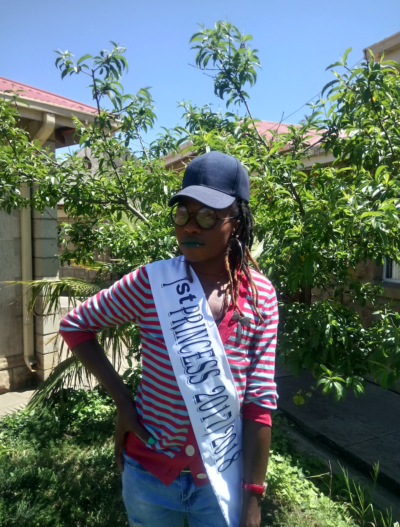
As of July, 16, 2018, Wits University students have been at liberty to elect or change their titles to those which affirm their gender. However, this is only applicable to university correspondence and internal use versus any external correspondence. Legally binding documents will still bear a title aligned to the “legal” gender marker. The challenge remains.
It is invalidating and upsetting for a person who was assigned male at birth but identifies as female to be continually addressed by a non-affirming title. It is without any doubt that there are social, economic, political and cultural imperatives that require both reflection and intervention to address the inequalities and injustices generated by the status quo of these systems. It’s time that these marginalising institutions change their policies to become more inclusive. Banks, government departments, medical fraternities, religious, educational, legal and other institutions must implement more inclusive practices. Especially with the use of language.
“We live in a country where people believe what they see, not what they are told. I look at my Identification documents and it pierces through me. I feel bad and rejected,” said Motaung.
She further endorses the idea of adding a third-person pronoun, or gender-neutral pronouns as an option in official documents. “Even if the service provider tries to make me feel free, if all the questions still refer to “male” or “female”, I still feel misrepresented.”
While diversity and inclusion are major conversations amongst Human Rights Activists, very little discussion is held about gender-neutral pronouns. The conventional, socially-placed categories that define woman and man do not naturally exist. They were created to convey a view of the world that in turn constrains how others view said world. It is when these constraints breakdown that the shortcomings of language are exposed.
The law is very pervasive and affects many aspects of people’s lives. As we live to witness the growing “juridification” of life – that is, the expansion and penetration of the legal into more and more aspects of other personal and social spheres, the importance of law and rights in people’s lives becomes increasingly obvious.
There is no law in Lesotho that makes provision for transgender, non-binary and gender non-conforming persons to change the gender markers in their identity documents. As it stands, transgender persons who use a passport that doesn’t reflect their gender expression could be charged with committing an offence. While Chapter II of Lesotho’s constitution sets out the protection of fundamental rights and freedoms, there is no mention of gender identity or sexual orientation. However, transgender, non-binary and gender non-conforming humans can also rely on their rights to be protected by the constitution, including the rights to equality, freedom, expression, and personal liberty.
The inclusion of “they” as a set option for a third-person, singular pronoun in English would promote a safer environment for non-cisgender people. A changing vocabulary is something that can be paralleled with a changing society. Society starting to use gender-neutral terms could prompt societal change over time.
COMMENTS