HIV and wider development issues
From weak transport networks to food shortages, a country’s wider context has a huge part to play in how individuals and communities are able to respond to HIV.
Key Correspondents document the links between HIV and wider development as a way to advocate for the economic, social and cultural empowerment of those most at risk of and living with HIV.
Hydro power proves life changing for people with HIV in Zimbabwe
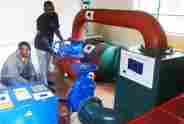
Shupi is an unemployed widower with three children, living in a remote village. She is also living with HIV and a new hydro power project has helped change her life. more
Malawian song fuels HIV stigma
A recently released Malawian song mocking people living with HIV shows the extent to which some people can go to achieve fame, money and power. more
Uganda: midwives shortage hinders efforts to prevent HIV in children
Every day Mercy Nanyonga wakes up, she knows that she is going to help a pregnant woman bring new life into the world. more
Zimbabwe: economic decline drives single mums to sex work
Poverty and the need to provide for their children, is causing a rise in women turning to sex work in Zimbabwe, despite the fact the profession places them at higher risk of contracting HIV. more
Health minister: HIV response can help tackle malaria in Southern Africa
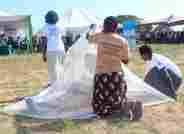
Sibongile Ndlela-Simelane, Swaziland’s minister of health and social welfare, has called for lessons learned from the HIV response in Southern Africa to be applied to the response to malaria. more
Latent TB: a time bomb among people living with HIV in Kenya
On World TB Day, Lucy Maroncha asks why people living with HIV in Kenya are not being offered effective diagnostic tests which mean they could receive early treatment on tuberculosis. more
Zimbabwe: shortage of health workers threatens health delivery
Health workers in Zimbabwe are overburdened and the health delivery system, in particular HIV-related issues, is under threat. more
“My children will not starve while I have my body to sell”
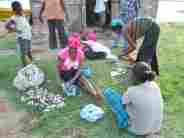
At Katwe-Kabatoro landing site on the shores of Lake George in Uganda’s Kasese district, the HIV epidemic is taking another twist. more
Ice hockey strategy needed to tackle TB-diabetes co-infection
Health experts have called for international action against a looming co-epidemic of diabetes and tuberculosis, in a new report published on 29 October. more
Fear causes media to self-censor on sexual minorities in Africa
What is it about lesbians, gays, bisexuals, transgender and intersex people that ties broadcasters’ tongues? more
Ebola outbreak puts access to HIV treatment under threat
“I am safe, don’t worry.” This is how my friend Wilhemina, from Sierra Leone, always ends our mails. Whenever she says so, I smile with relief. more
Young HIV positive women’s woes deepen as Zimbabwe economy slumps
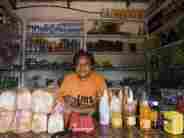
As Zimbabwe’s economy continues to decline, young women living with HIV are facing major challenges to health and well-being due to increasing poverty. more
Hepatitis C and HIV: the time has come for new advocacy
As I write this, Alberto, one of my patients with HIV is dying because of lack of treatment for his hepatitis C. By the time you read this, he will be gone. more
Malawi: Village chiefs unknowingly sleep with sex workers
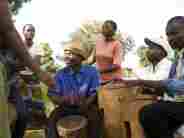
Some chiefs in Rumphi district in northern Malawi risk contracting HIV because they unknowingly sleep with hired sex workers during chief installation ceremonies. more
Tour guides at higher risk of HIV Infection
Guides working in Malawi’s top tourist destinations face an increased risk of HIV infection, according to a spokesman from the Cape Maclear Tour Guides Association. more
Young Ethiopians support themselves through condom distribution
After high school Zinash Kidanu* dreamt of a college education, but her dream went unfulfilled until a job selling condoms changed her life. more
Stigma and discrimination still rampant in Uganda
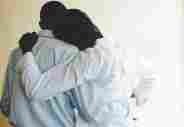
Nearly half of people living with HIV in Uganda report that they have suffered verbal abuse, harassment and threats as a result of their status. more
Migrants want equality and dignity
Migrant workers keep many economies in Asia and the Middle East functioning, yet migrants are often vulnerable to violence, discrimination and lack of social and healthcare services. more
Lack of health services for young people fuels HIV and teenage pregnancies
Today, an international family planning conference gets underway in east Africa, where a lack of sexual and reproductive health services is fuelling high rates of HIV infection in young people. more
Malawi’s largest HIV organisation celebrates 20 years of saving lives
This year, the National Association of People Living with HIV in Malawi turns 20 and celebrates a proud history of helping people learn how to live positively. more
Bishop and key Ugandan HIV advocate dies of snake bite
The recent death of Bishop Illukor, retired Anglican primate of Soroti District, Eastern Uganda, from a snakebite was a tragic event that shocked the community. more
Uganda requires new strategies to fight HIV
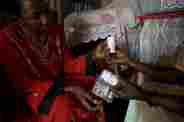
Uganda requires new strategies if the country is to change the course of HIV transmission according to an official from the Ministry of Health. more
Rogue herbalists fleece people living with HIV in Kenya
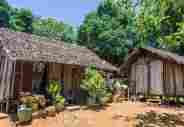
A promise for a cure that would release Jesse Ng’ang’a from the daily intake of antiretroviral drugs saw him visit one of the many cure-it-all herbalists in Gilgil town. more
Ugandan activists call for early action on patent barriers for generic HIV drugs
Human rights organisations warn that action must start now to protect the lives of thousands of Ugandans on HIV treatment, who stand to suffer if generic drugs are outlawed in 2016. more
Abuja+12: achievements and bottlenecks in the Ivory Coast
One year on from the launch of the Abuja+12 roadmap to address AIDS, TB and malaria in Africa, what progress has been made? more
Ugandan husband divorces wife due to HIV diagnosis
Since her HIV diagnosis, Grace has overcome horrendous stigma and discrimination to start a new life operating a small business and looking after her grandchild. more
UN and EU sign 44 million euro deal with Zambia on maternal, neonatal and child health
The United Nations and the European Union have signed a 44 million Euro agreement aimed at accelerating progress on the Millennium Development Goals (MDGs) in Zambia.
more
Safe water reducing oppportunistic diseases among people living with HIV

Over 18,000 thousand families in Nyanza region have been provided with clean water. Access to clean safe drinking water has contributed to a decline in opportunistic diseases among people living with HIV in the Nyanza region, Kenya. This follows the … more
Kenya launches digital healthcare surveillance
Kenya has made the first notable step to deal with illegal trafficking of ARVs by recently launching digital drug surveillance technology in Nairobi. The Pharmacovigilance Electronic Reporting System (PV-ERS) is a suite of software applications with a web portal, which … more
Food cuts hit hard for people living with HIV
Sopheap (given name) is a 42 year-old HIV positive women currently living in Sonikum district in the province of Siem Reap, Cambodia. She has been struggling alone to provide for her family since her husband left the family home shortly … more
International Women’s Day: a report from Zambia
Today is International Women’s Day and various events are taking place all over the world. In Zambia, women, men, children and youth are commemorating the day under the national theme of ‘The gender agenda: gaining momentum’. more
Zimbabwe’s humanitarian situation improves
Zimbabwe’s humanitarian situation is reported to be improving, resulting in the United Nation’s Office for the Coordination of Humanitarian Affairs appealing for approximately half of the resources originally requested in 2012. more

 Our correspondents are writing for change on HIV issues relating to young people, as well as drug use.