

Police officer’s enforcement of an outdated law discriminates against sex workers.
People can decide to pay to watch sex on screen. But are considered criminals when they decide to pay to have said sex, behind closed doors – and often in the privacy of their own homes. Sex work, often termed the oldest profession, is a practice which is thriving in Malawi despite being shunned by the general population.
Walk the major cities’ main roads and it’s not surprising to find mostly women, half-clad, selling their wares as it were. Providing a much-needed service if the constant demand and the hourly rate is anything to go by.
Opponents have over time shown hostility towards sex work. They quote the Bible scouring it for references of immorality. They attribute infidelity and broken homes to it. They justify the constant abuse of sex workers; both physical and verbal, as appropriate. The latter is so endemic that practitioners have come to accept this violence as an inherent part of the work. 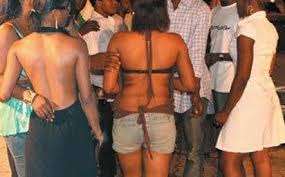
These opponents include law enforcement officers contradictory to their oath to protect and to serve. Instead they abuse their power by arresting sex workers based on “rogue and vagabond” offences as outlined by section 184(1)(c) of Malawi’s penal code. While it remains true that ill-intentioned criminals do exist and should be prosecuted accordingly, these conditions do not apply to most of the sex workers who are found loitering on the streets at night.
There is no provision that currently criminalises sex workers in Malawi’s Penal Code. Yet police officers operate on the assumption that sex work is illegal. This supposition is based on an interpretation of section 146 of the Penal Code. It prohibits a woman from living on the earnings of “prostitution”. Such an interpretation is then used to justify an arrest under the full text of section 184(1)(c), which provides that: “every person found in or upon or near any premises or in any road or highway or any place adjacent thereto or in any public place at such time and under such circumstances as to lead to the conclusion that such person is there for an illegal or disorderly purpose, is deemed a rogue and vagabond.”
Malawi’s high court made a determination in Gwanda v State at beginning of last year. After an application was brought by street vendor, Mayeso Gwanda, who challenged the constitutionality of the offence. The court nullified the “rogue and vagabond” offence. Although Gwanda was successful, the continued plight of sex workers remains glaring. On numerous occasions sex workers have been the victims of abuse, extortion and sexual harassment, oftentimes at the hands of police. Worse still, these crimes go unreported and the women rarely receive medical attention when they are raped. Instead they endure additional trauma at the hands of health practitioners whose stigma often results in their hurling their own abuses rather than offering the required medical care. 
The Gwanda ruling has resulted in mixed reactions. While civil society organisations applaud Malawi’s high court for nullifying the “rogue and vagabond” offence, there is still a long way to go before ending the violence and abuse sex workers are subjected to. Still, this could be a stepping stone to creating a safer and more conducive environment for sex work in the country.
A first step to empowering civil society organisations to take the lead in drafting laws and policies regulating sex work. According to Malawi’s growing movement of sex workers and activists this more policy changes must be implemented in agreement with the charter of rights and freedoms.
Despite equal rights being enshrined in Malawi’s constitution and the regional and international conventions to which Malawi is a party, the continued abuse and arrest of sex workers violates their inherent right to dignity and freedom of privacy. This, when they too are trying to do is make a living.

COMMENTS